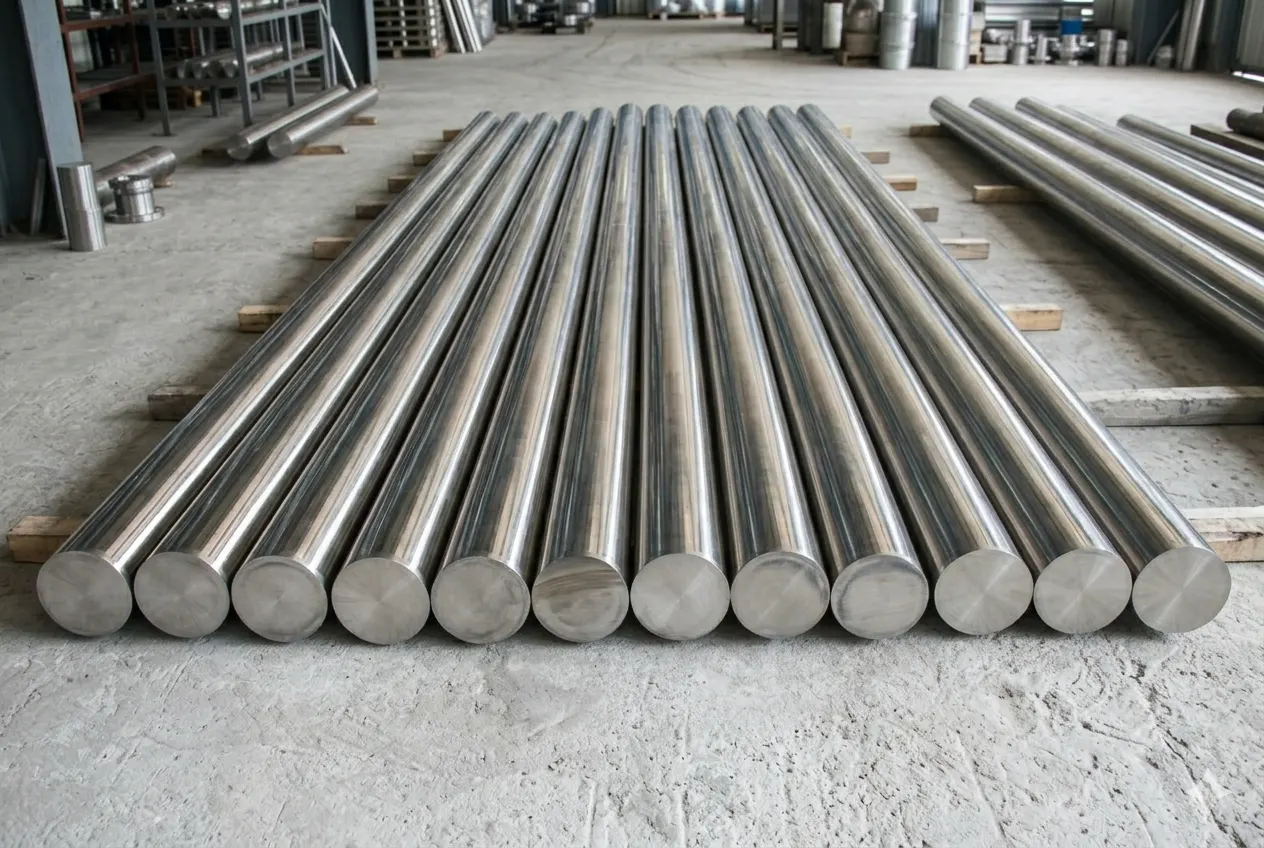
The main difference between standard SS 316 and SS 316L is that SS 316L contains much less carbon, with a maximum limit of just 0.03%, which keeps it from cracking or corroding after it is welded. While both metal grades offer excellent protection against harsh saltwater and chemicals, choosing the right variant depends entirely on whether your project requires heavy welding or standard machining. Understanding these small structural changes will help you avoid material failures and keep your project within budget. Let us break down the exact technical differences in simple terms.
What exactly is 316L SS and why is it used?
An ss 316l grade metal is a premium, marine-grade stainless steel alloy that
includes an addition of 2% to 3% molybdenum. This specific chemical ingredient
gives the metal an incredible ability to resist pitting, rusting, and severe
corrosion in saltwater environments.
The "L" in its name stands for "Low Carbon," which makes it the ultimate choice
for heavy-duty industrial fabrications. Industrial manufacturers prefer 316l ss
because it remains highly durable and structurally sound under extreme
environmental stress.
When evaluating materials for complex industrial layouts, this alloy offers
unparalleled longevity in aggressive chemical media. It provides engineers with
a highly reliable substrate that prevents microscopic cracks from forming during
high-vibration applications.
What is the actual difference between SS 316 and 316L?
The primary difference between ss 316 and 316l comes down to the carbon
percentages hidden inside the metal matrix. Standard 316 allows up to 0.08%
carbon, whereas the 316L variant strictly caps the carbon content at a maximum
of 0.03%.
While this tiny metallurgical change might seem minor, it completely changes how
the two metals behave when exposed to extreme heat. Standard 316 is perfectly
fine for general use, but 316L is required when severe corrosive conditions are
present.
Aside from the altered carbon threshold, both variants share identical
proportions of nickel, chromium, and molybdenum. This means sourcing premium
Stainless Steel
316 Round Bars provides an identical level of natural resistance
to general oxidation and uniform rusting across most non-welded environments.
Why does the carbon limit matter during welding?
When you weld standard stainless steel, the high heat causes carbon to mix with
chromium, creating a problem called carbide precipitation. This process robs the
metal of its protective layer, making the welded joints highly vulnerable to
rusting and cracking.
Because ss 316l grade steel has so little carbon to begin with, weld decay
simply cannot happen. This means your welded joints stay perfectly strong, safe,
and rust-free without needing extra heat treatments after fabrication.
By eliminating the need for post-weld annealing, fabrication shops can save
significant time and operational costs during assembly. This makes the
low-carbon version indispensable for building large tanks, chemical pipelines,
and structural marine components.
What are the mechanical properties of these two alloys?
Standard grade 316 provides a slightly higher yield and tensile strength
compared to its low-carbon counterpart. The interstitial carbon atoms in
standard 316 naturally harden the metal lattice, making it superior for
non-welded structural components.
Conversely, 316l ss exhibits enhanced ductility and elongation percentages,
making it much easier to form, draw, and bend. It is marginally softer but
highly resilient against mechanical fatigue under cold-working pressures.
For heavy-load fasteners, valve parts, or high-pressure components that do not
require welding, standard 316 remains the preferred engineering choice. However,
if structural flexibility and weld safety are your goals, 316L is the ideal
selection.
How do high temperatures affect 316 vs 316L?
When operational temperatures exceed 500°C, the performance curves of these two
metals diverge significantly. Standard 316 retains its creep strength, meaning
it resists stretching and deforming under long-term thermal stress.
The lower carbon content in ss 316l grade causes its mechanical load capacity to
drop off faster at elevated temperatures. Therefore, using 316L in
ultra-high-temperature boiler pipelines can lead to premature structural
failures.
For extreme thermal environments, engineers often specify standard 316 or the
high-carbon 316H variant. For low to mid-temperature setups below 450°C, 316L
continues to reign supreme due to its chemical stability.
When should you source a 316L round bar over standard 316?
You should choose a 316l ss round bar whenever your manufacturing process
involves extensive plasma cutting, machining, or manual welding. It is the
safest choice for hardware that will be permanently submerged in seawater or
acidic chemical baths.
Selecting this grade avoids the sudden risk of intergranular corrosion along the
heat-affected zones of your metal pieces. It guarantees that your completed
industrial fabrications maintain their structural integrity for decades without
rusting.
For marine rigging, boat fittings, and heavy chemical processing machinery,
upgrading to 316L ensures total compliance with international safety protocols.
It provides long-term peace of mind by eliminating unpredictable joint failures.
Where does standard 316 perform better than 316L?
Standard 316 performs best in applications where maximum tensile hardness and
structural rigidity are the absolute priorities. Heavy-duty threaded fasteners,
industrial gear shafts, and high-pressure fluid fittings benefit greatly from
its elevated strength.
Since these specific parts are machined from solid bar stock rather than welded,
carbide precipitation is never an issue. This allows you to leverage the full
mechanical advantages of the higher carbon baseline safely.
It is also highly favored in high-temperature heat exchangers where internal
pressure demands excellent creep resistance. Choosing standard 316 here delivers
a structurally sound solution at a highly efficient production cost.
How do these alloys perform in marine environments?
Both grades are widely classified as authentic marine-grade steels because their
molybdenum content fights off aggressive chloride attacks. They easily withstand
constant exposure to salt spray, brackish water, and coastal atmospheric
pollution.
However, if a boat component or marine structure must be welded during assembly,
standard 316 will slowly fail over time. The welded areas will succumb to
localized pitting and crevice corrosion due to the heat-induced carbon
shift.
By specifying an ss 316l grade round bar for marine infrastructure, you
eliminate this specific vulnerability completely. The entire assembly remains
perfectly passive and rust-resistant in deep-sea environments.
Why are these grades essential for the pharmaceutical sector?
The pharmaceutical and biotechnology industries require processing equipment
that is perfectly non-porous and ultra-hygienic. Metal surfaces must withstand
aggressive sanitizing chemicals, high-pressure steam cleaning, and acidic
organic compounds.
Using 316l ss prevents any metallic contamination from leaching into sensitive
medicine batches or chemical mixtures. Its smooth surface finish resists
bacteria buildup, making it exceptionally easy to clean to sterile
standards.
Because pharmaceutical production loops rely on complex, intricately welded
piping networks, 316L is the mandatory industry benchmark. It ensures the entire
manufacturing pipeline remains entirely free from corrosive degradation.
What is the expected SS 316L round bar price in India?
When calculating your project budget, understanding the shifting ss 316l round
bar price helps procurement teams accurately forecast costs. In local industrial
markets, standard marine-grade stock starts at a baseline 316 round bar price of
₹195 per kilogram.
Because the low-carbon 316L variant requires extra processing steps to reduce
carbon content, its price generally carries a slight premium over standard grade
316. To make comparisons simple, Steel House India keeps your bulk ordering data
completely transparent:
| Stainless Steel Grade | Estimated Price (per KG) | Available Dimensions |
|---|---|---|
| Standard SS 316 | ₹195 / Kilogram | 3mm - 800mm |
| Low-Carbon SS 316L | ₹210 - ₹240 / Kilogram | 3mm - 800mm |
What sizes and order quantities are available for purchase?
Sourcing your raw materials through Steel House India gives you access to a
massive inventory tailored for diverse manufacturing setups. Our round bars are
available in diameters ranging from a precise 3mm all the way up to 800mm.
To make bulk procurement easy and cost-effective, the minimum order quantity is
set at a highly accessible 25 kilograms. This allows both mid-scale workshops
and large industrial plants to get the exact amount of material they need.
Every batch is delivered with verified material test certificates ensuring
strict adherence to international chemical limits. This guarantees your
procurement workflow remains smooth, traceable, and fully compliant with
engineering specs.
How does dual-certification help engineering buyers?
Many modern steel mills now produce what is known as dual-certified 316/316L
stainless steel bar stock. This advanced material possesses the ultra-low carbon
chemistry of 316L along with the higher tensile strength of 316.
By injecting trace amounts of nitrogen into the melt, metallurgists boost the
structural strength without adding carbon. This gives engineers the absolute
best of both worlds within a single product inventory.
Sourcing dual-certified round bars simplifies your warehouse storage and
eliminates the risk of mixing up grades. It streamlines your inventory
management while ensuring maximum safety across all fabrication projects.
What are the best welding practices for 316L bars?
When joining ss 316l grade round bars, choosing the correct filler metal is
critical to preserving corrosion resistance. Gas Tungsten Arc Welding (TIG) and
MIG welding are both highly effective methods for this alloy.
You should utilize matching 316L or slightly over-alloyed filler wires to ensure
the weld zone matches the base metal. Using high-purity argon shielding gas is
also required to protect the molten pool from atmospheric oxygen.
After finishing the weld, any surface discoloration should be removed via
chemical pickling and passivation. This quick post-weld cleanup restores the
chromium oxide film, ensuring total defense against future rust.
How does machinability differ between these two options?
The lower carbon footprint makes 316L marginally easier to machine, turn, and
drill during high-volume production. It causes slightly less tool wear, allowing
machine shops to optimize their cutting speeds effectively.
However, because all austenitic stainless steels work-harden rapidly, using
sharp cutting tools is absolutely mandatory. Allowing a cutting tool to rub
against the bar surface without cutting will quickly harden the metal face.
Using a heavy, continuous feed rate paired with a rich sulfurized cooling
lubricant yields the cleanest surface finish. This practice ensures your
finished machined parts meet the exact tight tolerances required by your
clients.
Are 316 and 316L round bars magnetic?
In their fully annealed state, both 316 and 316L stainless steels are entirely
non-magnetic or paramagnetic. Their internal austenitic crystal structure
prevents them from attracting magnets in standard industrial environments.
However, severe cold-working operations like drawing, rolling, or straight-cut
machining can alter this internal structure slightly. This mechanical stress can
introduce a very mild, localized magnetic response in the metal.
If your specialized equipment requires a completely non-magnetic environment, a
brief solution annealing treatment will reset the alloy. This thermal processing
completely dissolves any stress-induced magnetism, restoring full paramagnetism.
Why should you trust Steel House India for industrial sourcing?
Established in the year 1992, Steel House India has grown into one of the most
trusted names in the manufacturing, trading, wholesaling, and retailing of a
diverse range of premium steel products. Our extensive product line includes SS
round bars, stainless steel bars, and stainless steel coils.
We are highly recognized across the market because our components are demanded
for their exceptional strength, durability, and precision finish. Every single
item we deliver is manufactured using the finest grade raw materials and
advanced metallurgical technology.
By strictly adhering to global industry standards and quality norms, our
products offer superior performance and a long service life. This commitment to
cost-effectiveness and structural excellence has earned us a strong presence in
both domestic and international markets.
Summary Guide: Navigating the SS 316 and 316L Difference
Choosing between these two marine-grade alloys requires an accurate
understanding of your final application and assembly methods. If your industrial
project relies heavily on welding without post-weld heat treatment, 316L is the
superior option.
If your focus is purely on high mechanical strength, structural fasteners, or
elevated temperatures, standard 316 fits perfectly. Balancing these technical
factors protects your engineering workflow from unexpected asset depreciation.
For personalized technical consulting or to receive an optimized commercial
breakdown for your inventory, reach out to Steel House India. Our engineering
desk is always ready to assist you in selecting the perfect grade for your
business needs.
About The Author