Steel House India is a manufacturer, supplier, and stockist of ASTM A276 AISI 316L Stainless Steel Round Bars for fabrication systems, process engineering infrastructure, pharmaceutical equipment, chemical processing plants, food-grade production systems, and corrosion-resistant industrial applications. Manufactured in accordance with ASTM A276 specifications, stainless steel 316L round bars are widely used in industries requiring superior weldability, enhanced resistance to intergranular corrosion, and reliable performance in aggressive operating environments.
ASTM A276 UNS S31603 Stainless Steel 316L Round Bars belong to the austenitic stainless steel family and contain molybdenum for improved resistance against pitting and crevice corrosion. The lower carbon content compared to standard 316 stainless steel minimizes carbide precipitation during welding, making SS316L round bars a preferred material for welded fabrication systems, pressure piping infrastructure, storage tanks, heat exchangers, and corrosion-sensitive engineering applications where long-term material stability is critical.

ASTM A276 AISI 304 Stainless Steel Round Bars
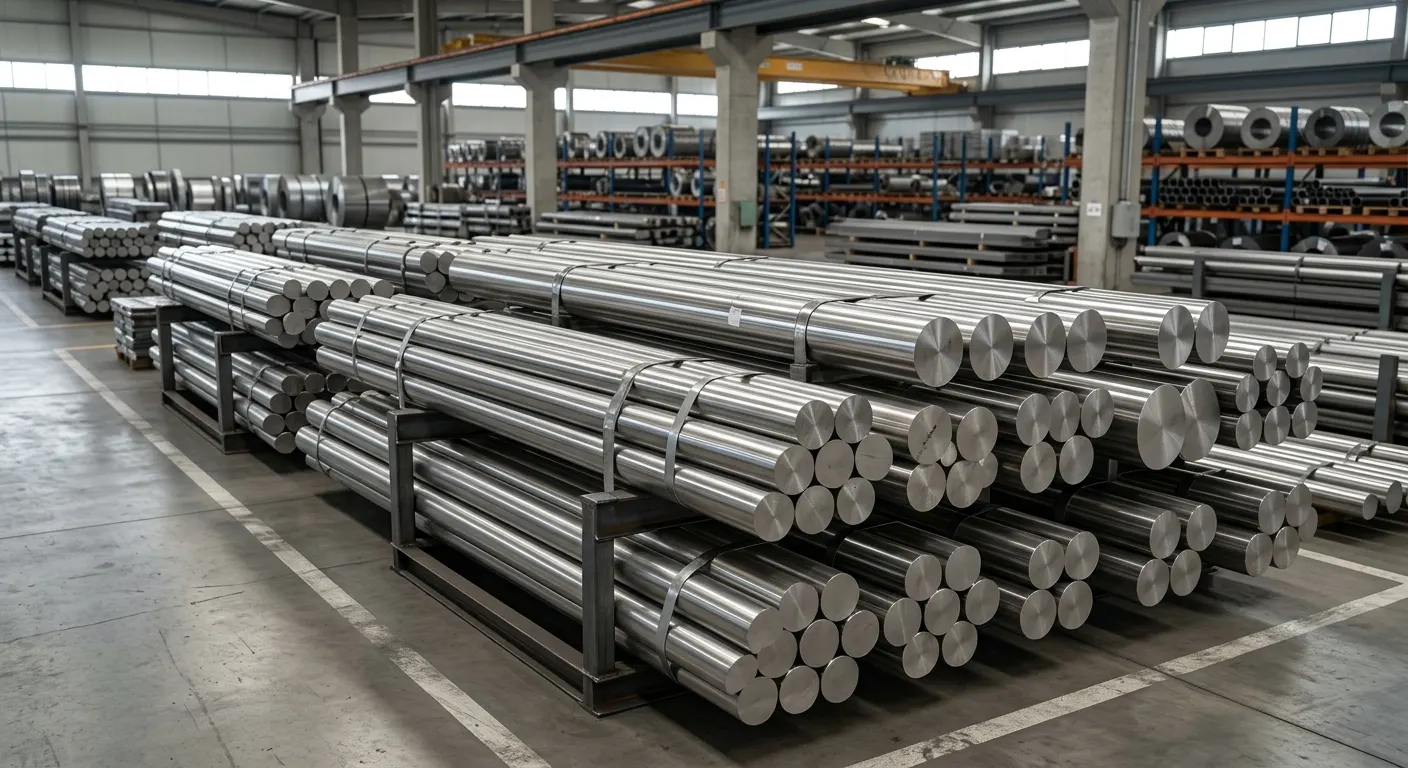
A STM A276 AISI 304 SS Round Bars
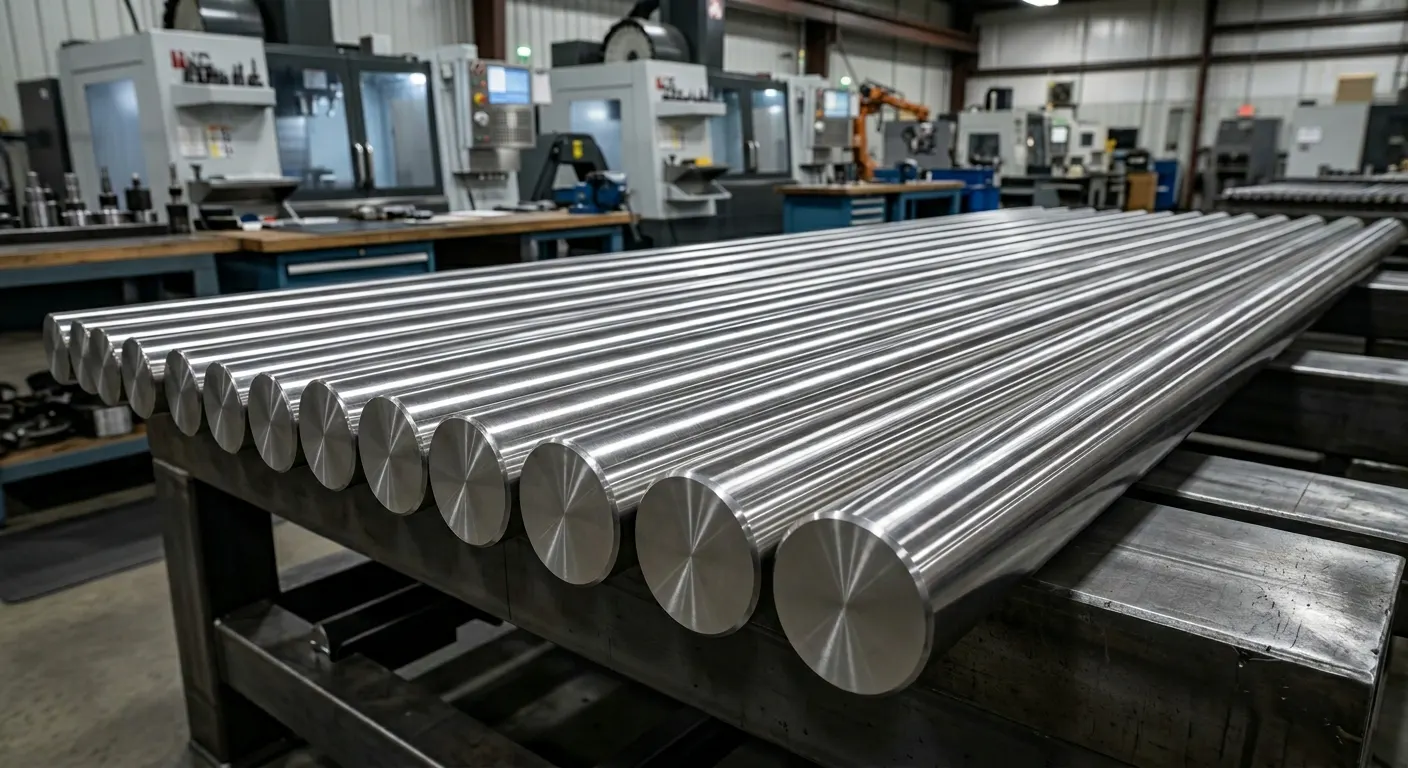
AISI 304 Stainless Steel Round Bars
ASTM A276 UNS S31603 Stainless Steel 316L Round Bars for Corrosion Resistant Fabrication Systems
ASTM A276 UNS S31603 Stainless Steel 316L Round Bars are engineered for industrial environments where corrosion resistance, fabrication flexibility, and welding performance must work together without compromising material integrity. These stainless steel bars are extensively utilized across pharmaceutical manufacturing systems, chemical handling facilities, marine engineering infrastructure, water treatment plants, and process piping assemblies that operate under corrosive service conditions. The combination of chromium, nickel, and molybdenum provides excellent protection against localized corrosion while maintaining the mechanical strength required for demanding industrial applications.
Compared to conventional stainless steel grades, SS316L round bars are specifically selected when extensive welding operations are involved. The low carbon chemistry helps reduce sensitization risks and improves corrosion resistance in heat-affected zones after fabrication. As a result, ASTM A276 stainless steel 316L round bars are frequently specified for pressure-retaining equipment, fabrication-intensive process systems, hygienic production environments, and industrial engineering projects where both corrosion resistance and fabrication reliability are essential to long-term operational performance.
Advantages of ASTM A276 AISI 316L Stainless Steel Round Bars
One of the primary advantages of ASTM A276 AISI 316L Stainless Steel Round Bars is their ability to maintain corrosion resistance even after extensive welding and fabrication activities. The reduced carbon content helps preserve the chromium-rich protective oxide layer that provides stainless steel with its corrosion-resistant properties. This characteristic makes SS316L round bars particularly suitable for fabricated assemblies that must perform reliably in chemical processing facilities, pharmaceutical systems, marine environments, and moisture-rich industrial applications.
In addition to excellent weldability, stainless steel 316L round bars offer strong resistance to pitting corrosion, crevice corrosion, and aggressive chemical exposure. The material also provides good toughness across a broad temperature range, consistent machinability, dimensional stability, and compatibility with various fabrication processes. These performance characteristics allow engineers and procurement professionals to specify ASTM A276 UNS S31603 round bars for critical applications where long service life, low maintenance requirements, and dependable material performance are required.
Why Low Carbon Stainless Steel 316L is Preferred for Welding Applications
Welding operations expose stainless steel materials to elevated temperatures that can alter the microstructure of the metal and affect corrosion resistance. ASTM A276 AISI 316L Stainless Steel Round Bars are specifically designed to address this challenge through a controlled low carbon composition. By limiting carbon content, the material reduces the formation of chromium carbides during welding, helping preserve the corrosion-resistant characteristics of the stainless steel even after extensive fabrication work.
This advantage is particularly important in industries such as pharmaceuticals, food processing, chemical manufacturing, and pressure equipment fabrication, where welded joints are often exposed to corrosive operating conditions. Engineers frequently select SS316L round bars because they provide greater confidence in long-term corrosion performance without requiring extensive post-weld treatments. The material's ability to maintain structural integrity and corrosion resistance after fabrication makes it one of the most widely specified stainless steel grades for welded industrial systems.
Understanding Carbide Precipitation in Stainless Steel Fabrication
Carbide precipitation occurs when carbon combines with chromium during exposure to elevated temperatures, particularly within the heat-affected zone of welded components. When chromium carbides form along grain boundaries, the surrounding material becomes depleted of chromium, reducing its ability to resist corrosion. This phenomenon, commonly referred to as sensitization, can lead to localized corrosion attacks and reduced service life in corrosive industrial environments.
ASTM A276 UNS S31603 Stainless Steel 316L Round Bars are manufactured with significantly lower carbon levels than standard 316 stainless steel. This reduction minimizes carbide formation during welding and helps maintain chromium availability throughout the material structure. The result is improved protection against intergranular corrosion and enhanced reliability in fabricated equipment exposed to demanding service conditions.
How ASTM A276 UNS S31603 Improves Post-Weld Corrosion Resistance
Post-weld corrosion resistance is a critical requirement in many industrial sectors because welded joints often become the most vulnerable areas within a fabrication assembly. ASTM A276 UNS S31603 Stainless Steel 316L Round Bars help address this challenge by reducing the likelihood of chromium depletion during fabrication processes. The low carbon composition preserves the material's corrosion-resistant properties and supports long-term durability in corrosive operating environments.
This improved post-weld performance is particularly valuable for process piping systems, storage vessels, pharmaceutical equipment, chemical reactors, and fabrication-intensive engineering projects. By maintaining corrosion resistance across both base material and welded sections, SS316L round bars provide a dependable solution for industrial systems that require consistent performance, fabrication flexibility, and long operational service life under challenging environmental conditions.
Chemical Composition and Mechanical Properties of ASTM A276 AISI 316L Stainless Steel Round Bars
ASTM A276 AISI 316L Stainless Steel Round Bars are manufactured under controlled metallurgical conditions to achieve the corrosion resistance, weldability, and mechanical performance required for critical industrial applications. The low carbon content distinguishes UNS S31603 from standard 316 stainless steel by minimizing carbide precipitation during welding while maintaining excellent resistance to corrosive environments.
For procurement teams, design engineers, and fabrication contractors, chemical composition and mechanical property data are often among the most important selection criteria because they directly influence corrosion performance, fabrication compatibility, pressure-retaining capability, and long-term service reliability.
Chemical Composition of ASTM A276 UNS S31603 Stainless Steel Round Bars
| Material Condition | Carbon C % | Manganese Mn % | Silicon Si % | Phosphorus P % | Sulfur S % | Chromium Cr % | Nickel Ni % | Molybdenum Mo % | Nitrogen N % | Iron Fe |
|---|---|---|---|---|---|---|---|---|---|---|
| ASTM A276 SS316L | 0.030 Max | 2.00 Max | 1.00 Max | 0.045 Max | 0.030 Max | 16.00–18.00 | 10.00–14.00 | 2.00–3.00 | 0.10 Max | Balance |
| UNS S31603 | 0.030 Max | 2.00 Max | 1.00 Max | 0.045 Max | 0.030 Max | 16.00–18.00 | 10.00–14.00 | 2.00–3.00 | 0.10 Max | Balance |
| Bright Drawn SS316L | 0.024 | 1.62 | 0.52 | 0.035 | 0.016 | 17.20 | 11.10 | 2.35 | 0.08 | Balance |
| Cold Drawn SS316L | 0.025 | 1.68 | 0.55 | 0.038 | 0.018 | 17.00 | 10.90 | 2.30 | 0.08 | Balance |
| Annealed SS316L | 0.026 | 1.75 | 0.60 | 0.040 | 0.020 | 16.90 | 10.80 | 2.20 | 0.08 | Balance |
| Precision Ground SS316L | 0.022 | 1.60 | 0.50 | 0.035 | 0.015 | 17.30 | 11.20 | 2.40 | 0.08 | Balance |
| Peeled SS316L | 0.024 | 1.65 | 0.52 | 0.036 | 0.017 | 17.10 | 11.00 | 2.35 | 0.08 | Balance |
| Forged SS316L | 0.027 | 1.80 | 0.65 | 0.040 | 0.020 | 16.80 | 10.70 | 2.20 | 0.08 | Balance |
The combination of chromium, nickel, and molybdenum gives ASTM A276 UNS S31603 round bars excellent resistance to chlorides, industrial chemicals, moisture exposure, and aggressive processing environments. The restricted carbon content helps maintain corrosion resistance after welding, making SS316L one of the most widely specified stainless steel grades for fabrication-intensive projects.
Mechanical Properties of SS316L Round Bars
| Product Condition | Tensile Strength MPa | Yield Strength MPa | Elongation % | Hardness HB | Hardness HRB | Density g/cm³ | Elastic Modulus GPa | Shear Modulus GPa |
|---|---|---|---|---|---|---|---|---|
| Annealed | 485 | 170 | 40 | 187 | 90 | 8.00 | 193 | 77 |
| Cold Drawn | 690 | 400 | 35 | 215 | 95 | 8.00 | 193 | 77 |
| Bright Drawn | 710 | 420 | 34 | 220 | 96 | 8.00 | 193 | 77 |
| Hot Rolled | 600 | 240 | 38 | 200 | 92 | 8.00 | 193 | 77 |
| Forged | 630 | 270 | 36 | 205 | 93 | 8.00 | 193 | 77 |
| Peeled | 680 | 390 | 35 | 212 | 95 | 8.00 | 193 | 77 |
| Centerless Ground | 700 | 410 | 34 | 218 | 95 | 8.00 | 193 | 77 |
| Precision Ground | 720 | 430 | 33 | 222 | 96 | 8.00 | 193 | 77 |
The mechanical characteristics of stainless steel 316L round bars allow the material to perform reliably across fabrication systems, pressure piping infrastructure, chemical handling equipment, and precision engineering assemblies. The balance between strength, ductility, and corrosion resistance makes SS316L suitable for applications where welded fabrication and long-term durability are equally important.
Physical Properties of Stainless Steel 316L Bright Bars
| Property | Value | Unit | Property | Value | Unit | Property | Value |
|---|---|---|---|---|---|---|---|
| Density | 8000 | kg/m³ | Specific Heat | 500 | J/kg.K | Elastic Modulus | 193 GPa |
| Melting Range | 1375–1400 | °C | Thermal Conductivity | 16.3 | W/m.K | Shear Modulus | 77 GPa |
| Electrical Resistivity | 0.74 | µΩ.m | Thermal Expansion | 16.0 | µm/m°C | Poisson Ratio | 0.30 |
| Magnetic Permeability | 1.02 | - | Modulus of Rigidity | 77 | GPa | Thermal Diffusivity | 4.0 mm²/s |
| Density at 20°C | 8.00 | g/cm³ | Oxidation Resistance | Up to 870 | °C | Relative Permeability | 1.01 |
| Thermal Capacity | 500 | J/kg.K | Electrical Conductivity | 1.35 | MS/m | Annealing Temperature | 1040–1120 °C |
| Hot Working Range | 1150–1260 | °C | Forging Temperature | 1175–1200 | °C | Solution Annealing | 1040–1120 °C |
| Scaling Resistance | Up to 870 | °C | Thermal Expansion Rate | 16.0 | µm/m°C | Modulus Ratio | 2.5 |
The physical properties of ASTM A276 AISI 316L stainless steel round bars contribute to their widespread use across pharmaceutical manufacturing, process engineering systems, marine infrastructure, fabrication assemblies, and chemical processing equipment. The material provides a combination of corrosion resistance, fabrication compatibility, thermal stability, and mechanical reliability required for demanding industrial environments.
ASTM A276 Stainless Steel 316L Round Bar Specifications and Available Sizes
Steel House India supplies ASTM A276 AISI 316L stainless steel round bars in multiple
dimensions, finishes, and manufacturing conditions to support fabrication contractors,
process equipment manufacturers, EPC companies, and industrial engineering projects.
Availability across hot rolled, cold drawn, bright drawn, peeled, forged, and precision
ground conditions allows buyers to source material suitable for both machining-intensive and
fabrication-focused applications.
SS316L round bars are commonly supplied for pressure systems, storage equipment,
pharmaceutical infrastructure, marine engineering assemblies, chemical processing plants,
and food-grade production systems where dimensional consistency and corrosion-resistant
performance are critical procurement requirements.
Stainless Steel 316L Round Bar Dimensions and Product Forms
| Product Form | Diameter Range | Metric Sizes | Inch Sizes | Length Range | Surface Finish | Manufacturing Condition | Supply Status |
|---|---|---|---|---|---|---|---|
| Bright Bars | 3 mm – 100 mm | M3 – M100 | 1/8" – 4" | 3–6 Meters | Bright | Cold Drawn | Ready Stock |
| Cold Drawn Bars | 5 mm – 120 mm | M5 – M120 | 3/16" – 5" | 3–6 Meters | Smooth | Cold Finished | Ready Stock |
| Hot Rolled Bars | 16 mm – 350 mm | M16 – M350 | 5/8" – 14" | 3–6 Meters | Black | Hot Rolled | Available |
| Forged Bars | 130 mm – 500 mm | M130 – M500 | 5" – 20" | Custom | Forged | Open Die Forged | Available |
| Peeled Bars | 20 mm – 150 mm | M20 – M150 | 3/4" – 6" | 3–6 Meters | Peeled | Finished | Available |
| Centerless Ground Bars | 5 mm – 90 mm | M5 – M90 | 3/16" – 3.5" | 3–6 Meters | Ground | Precision Finished | Available |
| Polished Bars | 6 mm – 80 mm | M6 – M80 | 1/4" – 3" | 3–6 Meters | Polished | Bright Finished | Available |
| Machined Bars | 10 mm – 200 mm | M10 – M200 | 3/8" – 8" | Custom | Machined | Customer Requirement | Available |
Tolerance Specifications for SS316L Bright Bars
| Diameter Range | h8 Tolerance mm | h9 Tolerance mm | h11 Tolerance mm | Straightness mm/m | Ovality mm | Surface Roughness Ra µm | Length Tolerance mm |
|---|---|---|---|---|---|---|---|
| 3–6 mm | ±0.022 | ±0.036 | ±0.090 | 0.50 | 0.01 | 0.8 | ±2 |
| 6–12 mm | ±0.027 | ±0.043 | ±0.110 | 0.50 | 0.01 | 0.8 | ±2 |
| 12–30 mm | ±0.033 | ±0.052 | ±0.130 | 0.50 | 0.02 | 0.8 | ±2 |
| 30–50 mm | ±0.039 | ±0.062 | ±0.160 | 0.80 | 0.03 | 1.0 | ±3 |
| 50–80 mm | ±0.046 | ±0.074 | ±0.190 | 0.80 | 0.03 | 1.2 | ±3 |
| 80–120 mm | ±0.054 | ±0.087 | ±0.220 | 1.00 | 0.05 | 1.6 | ±5 |
| 120–200 mm | ±0.063 | ±0.100 | ±0.250 | 1.00 | 0.06 | 1.8 | ±5 |
| 200–300 mm | ±0.072 | ±0.115 | ±0.290 | 1.20 | 0.08 | 2.0 | ±8 |
Surface Finish Specifications of ASTM A276 SS316L Round Bars
| Surface Finish | Roughness Ra µm | Dimensional Accuracy | Straightness Quality | Machining Suitability | Appearance | Engineering Applications | Manufacturing Process |
|---|---|---|---|---|---|---|---|
| Bright Finish | 0.8 | High | Excellent | Excellent | Metallic Bright | Precision Components | Cold Drawn |
| Ground Finish | 0.2 | Precision | Excellent | Excellent | Fine Ground | Shafts & Machining | Ground |
| Polished Finish | 0.4 | Precision | Excellent | Excellent | Reflective | Hygienic Systems | Polished |
| Peeled Finish | 1.2 | High | Very Good | Good | Clean Surface | General Engineering | Peeled |
| Black Finish | 3.2 | Standard | Standard | Moderate | Oxide Scale | Structural Use | Hot Rolled |
| Cold Finished | 0.8 | High | Excellent | Excellent | Smooth Surface | Machining Applications | Cold Drawn |
| Centerless Ground | 0.15 | Precision | Excellent | Excellent | Precision Finish | High Accuracy Components | Ground |
| Satin Finish | 1.5 | Medium | Good | Good | Matte Surface | Fabrication Systems | Finished |
ASTM A276 AISI 316L Stainless Steel Round Bars for Pharmaceutical and Chemical Processing Industries
ASTM A276 AISI 316L Stainless Steel Round Bars are extensively used in pharmaceutical
manufacturing systems and chemical processing facilities where corrosion resistance, hygiene
standards, fabrication reliability, and long-term material stability are critical
operational requirements. The low carbon composition of UNS S31603 helps maintain corrosion
resistance after welding, making the material suitable for process equipment that undergoes
extensive fabrication before installation.
In pharmaceutical production environments, stainless steel 316L round bars are commonly used
for equipment supports, process vessels, mixing systems, clean-room fabrication assemblies,
and hygienic piping infrastructure. Chemical processing industries utilize SS316L round bars
for reactors, heat exchangers, storage systems, pressure-retaining equipment, and
fabrication components that are continuously exposed to aggressive chemicals, moisture, and
corrosive process media.
Industrial Utilization of ASTM A276 UNS S31603 Round Bars
| Industry Sector | Corrosion Exposure Level | Fabrication Requirement | Weldability Requirement | Material Selection Priority | Typical Components | Service Environment | Preferred Product Form |
|---|---|---|---|---|---|---|---|
| Pharmaceutical Manufacturing | High | High | High | Hygiene & Corrosion Resistance | Vessels, Supports, Equipment Parts | Controlled Process Areas | Bright Bars |
| Chemical Processing | Very High | High | High | Chemical Resistance | Reactors, Heat Exchangers | Corrosive Chemicals | Hot Rolled & Forged |
| Food Processing | High | Medium | High | Sanitary Compliance | Fabrication Assemblies | Washdown Environments | Bright Bars |
| Water Treatment Plants | High | Medium | Medium | Corrosion Resistance | Pumps, Shafts, Components | Moisture & Chemicals | Cold Drawn Bars |
| Marine Engineering | Very High | Medium | Medium | Chloride Resistance | Structural Components | Coastal Conditions | Hot Rolled Bars |
| Process Piping Systems | High | Very High | High | Welded Fabrication | Pipe Supports & Assemblies | Process Infrastructure | Bright Bars |
| Biotechnology Facilities | High | High | High | Cleanability & Corrosion Resistance | Equipment Assemblies | Sterile Environments | Ground Bars |
| Power Generation Plants | Medium | Medium | Medium | Mechanical Reliability | Engineering Components | Industrial Conditions | Forged Bars |
The versatility of stainless steel 316L round bars allows the material to support both highly regulated hygienic environments and heavy-duty industrial processing systems. This broad application range is one of the primary reasons why UNS S31603 remains one of the most specified austenitic stainless steel grades in fabrication-intensive industries.
SS316L Bright Bars for Precision Machining and Engineering Applications
SS316L bright bars are widely selected for engineering projects that require dimensional
consistency, precision machining, smooth surface finish, and reliable mechanical
performance. The cold drawing process improves straightness, surface quality, and
dimensional accuracy, making bright bars suitable for manufacturing components that require
tight tolerances and repeatable machining results.
Precision engineering industries frequently utilize stainless steel 316L bright bars for
shafts, couplings, fasteners, pump components, valve parts, instrumentation hardware,
fabrication assemblies, and custom-machined industrial equipment. The material's combination
of corrosion resistance and machining compatibility enables manufacturers to produce
components that maintain both dimensional integrity and long-term performance in challenging
operating environments.
Engineering Characteristics of SS316L Bright Bars
| Property Category | Performance Level | Industrial Benefit | Application Impact | Machining Suitability | Fabrication Compatibility | Corrosion Performance | Dimensional Stability |
|---|---|---|---|---|---|---|---|
| Surface Finish | Excellent | Reduced Secondary Processing | Faster Production | High | High | High | High |
| Straightness | Excellent | Improved Machining Accuracy | Better Component Quality | High | Medium | N/A | High |
| Diameter Consistency | Excellent | Tight Tolerance Control | Precision Manufacturing | High | Medium | N/A | High |
| Weldability | Excellent | Easier Fabrication | Reduced Rework | Medium | High | High | High |
| Corrosion Resistance | Excellent | Longer Service Life | Lower Maintenance | N/A | High | High | High |
| Mechanical Reliability | High | Structural Stability | Consistent Performance | High | High | Medium | High |
| Fabrication Performance | Excellent | Improved Productivity | Faster Assembly | Medium | High | Medium | High |
| Service Durability | Excellent | Extended Operational Life | Reduced Downtime | N/A | High | High | High |
Because of these characteristics, ASTM A276 AISI 316L bright bars are commonly specified for precision-machined components used in pharmaceutical equipment, chemical processing systems, instrumentation assemblies, marine hardware, food-grade machinery, and fabrication-intensive engineering projects.
Difference Between ASTM A276 AISI 316 and 316L Stainless Steel Round Bars
ASTM A276 AISI 316 and ASTM A276 AISI 316L stainless steel round bars share similar
chromium, nickel, and molybdenum content, providing excellent corrosion resistance across a
wide range of industrial applications. However, the key distinction lies in carbon content.
Stainless steel 316L contains significantly lower carbon levels, which helps minimize
chromium carbide precipitation during welding and improves corrosion resistance within
heat-affected zones.
This difference becomes particularly important in fabrication-intensive industries where
extensive welding operations are performed. Engineers often select SS316L when welded joints
will be exposed to corrosive environments or when post-weld heat treatment is impractical.
Standard SS316 remains suitable for many corrosion-resistant applications, while SS316L is
generally preferred when welding performance and post-fabrication corrosion resistance
become critical project requirements.
SS316 vs SS316L Chemical Composition Comparison
| Property | SS316 | SS316L |
|---|---|---|
| Carbon (%) | 0.08 Max | 0.03 Max |
| Chromium (%) | 16.00 – 18.00 | 16.00 – 18.00 |
| Nickel (%) | 10.00 – 14.00 | 10.00 – 14.00 |
| Molybdenum (%) | 2.00 – 3.00 | 2.00 – 3.00 |
| Manganese (%) | 2.00 Max | 2.00 Max |
| Silicon (%) | 1.00 Max | 1.00 Max |
| Nitrogen (%) | 0.10 Max | 0.10 Max |
| Corrosion Resistance | Excellent | Excellent |
| Chloride Resistance | High | High |
| Welding Performance | Good | Excellent |
SS316 vs SS316L Welding and Fabrication Performance Comparison
| Performance Criteria | SS316 | SS316L |
|---|---|---|
| Carbon Content Control | Standard | Low Carbon |
| Weldability | Very Good | Excellent |
| Carbide Precipitation Resistance | Moderate | High |
| Intergranular Corrosion Resistance | Good | Excellent |
| Post-Weld Corrosion Resistance | Good | Excellent |
| Fabrication Suitability | High | Very High |
| Pressure Piping Applications | Suitable | Highly Preferred |
| Pharmaceutical Fabrication | Suitable | Preferred |
| Chemical Processing Equipment | Suitable | Preferred |
| Welded Process Systems | Good | Excellent |
Applications that prioritize general corrosion resistance and industrial engineering performance often evaluate Stainless Steel 316 Round Bars Manufacturers in India when comparing material grades for fabrication projects, pressure systems, and process infrastructure requirements. However, projects involving extensive welding operations typically favor ASTM A276 AISI 316L stainless steel round bars because of their superior resistance to sensitization and post-weld corrosion.
ASTM A276 Compliance Standards for UNS S31603 Stainless Steel Round Bars
ASTM A276 establishes the standard requirements for stainless steel bars used in industrial
fabrication, machining, structural engineering, pressure equipment, and process system
applications. Compliance with ASTM A276 ensures that stainless steel 316L round bars meet
defined requirements for chemical composition, mechanical properties, dimensional
tolerances, straightness, surface condition, and inspection procedures.
For procurement teams and engineering consultants, ASTM compliance provides confidence that
supplied materials satisfy recognized international standards for performance, consistency,
and traceability. ASTM A276 UNS S31603 stainless steel round bars are therefore widely
specified across pharmaceutical, chemical, marine, fabrication, and industrial engineering
projects where material verification and quality assurance are critical procurement
considerations.
Equivalent Standards of ASTM A276 AISI 316L Stainless Steel Round Bars
| ASTM Standard | AISI Grade | UNS Number | EN Standard | DIN Standard | JIS Grade | Werkstoff Number | ISO Designation |
|---|---|---|---|---|---|---|---|
| ASTM A276 | 316L | S31603 | X2CrNiMo17-12-2 | 1.4404 | SUS316L | 1.4404 | 316L |
| ASTM A479 | 316L | S31603 | X2CrNiMo17-12-2 | 1.4404 | SUS316L | 1.4404 | 316L |
| ASTM A182 | F316L | S31603 | X2CrNiMo17-12-2 | 1.4404 | SUS316L | 1.4404 | 316L |
| ASTM A240 | 316L | S31603 | X2CrNiMo17-12-2 | 1.4404 | SUS316L | 1.4404 | 316L |
| ASTM A312 | TP316L | S31603 | X2CrNiMo17-12-2 | 1.4404 | SUS316L | 1.4404 | 316L |
Material Testing and Inspection Standards for SS316L Round Bars
| Test Type | Testing Method | Applicable Standard | Inspection Frequency | Certification Availability | Acceptance Criteria | Inspection Category | Verification Purpose |
|---|---|---|---|---|---|---|---|
| PMI Testing | Spectrometer Analysis | ASTM | Batch Wise | Available | Grade Verification | Chemical | Material Identification |
| Tensile Testing | Universal Testing Machine | ASTM E8 | Batch Wise | Available | Mechanical Compliance | Mechanical | Strength Validation |
| Yield Strength Testing | UTM Testing | ASTM E8 | Batch Wise | Available | Specification Compliance | Mechanical | Performance Verification |
| Hardness Testing | Brinell/Rockwell | ASTM E18 | Batch Wise | Available | Hardness Range | Mechanical | Material Validation |
| Ultrasonic Testing | UT Inspection | ASTM A388 | As Required | Available | Internal Soundness | NDT | Defect Detection |
| Dimensional Inspection | Micrometer & Vernier | ASTM A276 | 100% Inspection | Available | Tolerance Compliance | Dimensional | Size Verification |
| Surface Inspection | Visual & Roughness Testing | ASTM A480 | 100% Inspection | Available | Surface Quality | Visual | Finish Verification |
| Positive Material Identification | XRF Analysis | ASTM | Batch Wise | Available | Grade Confirmation | Chemical | Traceability Control |
Why Choose Steel House India for ASTM A276 AISI 316L Stainless Steel Round Bars
Steel House India supplies ASTM A276 AISI 316L Stainless Steel Round Bars for pharmaceutical
manufacturing facilities, chemical processing plants, process piping infrastructure,
fabrication workshops, food-grade production systems, marine engineering projects, and
precision machining applications requiring corrosion-resistant stainless steel materials.
The focus is not only on supplying stainless steel round bars but on delivering material
that meets the dimensional, mechanical, and metallurgical requirements expected by
engineers, consultants, fabricators, and procurement professionals.
Industrial projects often require consistency across multiple batches, reliable
documentation, dimensional accuracy, and material traceability. Steel House India supports
these requirements by supplying ASTM A276 UNS S31603 stainless steel round bars in hot
rolled, cold drawn, bright drawn, peeled, forged, polished, and centerless ground conditions
suitable for machining, fabrication, welding, and corrosion-resistant engineering
applications. This capability allows project teams to source materials that align with
fabrication specifications, inspection requirements, and long-term operational expectations.
Supply Capabilities for ASTM A276 UNS S31603 Stainless Steel Round Bars
| Supply Parameter | Capability |
|---|---|
| Product Standard | ASTM A276 |
| Material Grade | AISI 316L / UNS S31603 |
| Product Type | Stainless Steel Round Bars |
| Supply Condition | Hot Rolled, Cold Drawn, Bright Drawn, Peeled, Forged |
| Surface Finishes | Bright, Ground, Polished, Black, Peeled |
| Diameter Availability | Small to Large Diameter Range |
| Custom Cutting | Available |
| Dimensional Verification | Available |
| PMI Testing | Available |
| Mechanical Testing | Available |
| Mill Test Certificates | Available |
| Material Traceability | Available |
| Industrial Project Supply | Available |
| Fabrication Support Requirements | Supported |
| Bulk Quantity Supply | Available |
Quality Focus for Industrial Engineering Applications
| Quality Parameter | Verification Method | Objective |
|---|---|---|
| Chemical Composition | Spectrometer Analysis | Grade Compliance |
| Mechanical Properties | Tensile & Hardness Testing | Performance Validation |
| Dimensional Accuracy | Precision Measurement | Tolerance Compliance |
| Surface Finish | Visual & Surface Inspection | Finish Verification |
| Material Identification | PMI Testing | Traceability |
| Internal Soundness | Ultrasonic Testing | Defect Detection |
| Documentation | MTC Verification | Procurement Compliance |
| Batch Consistency | Inspection Procedures | Supply Reliability |
The selection of stainless steel 316L round bars often influences fabrication quality, welding performance, corrosion resistance, and overall equipment reliability. For industries operating in corrosive or fabrication-intensive environments, sourcing ASTM-compliant material from a supplier capable of maintaining consistent quality standards becomes a critical part of successful project execution.
Stainless Steel 316L Round Bar Supplier for Welded Fabrication and Corrosion Resistant Industrial Systems
ASTM A276 AISI 316L Stainless Steel Round Bars continue to be one of the most specified
stainless steel grades for industrial applications where corrosion resistance, weldability,
fabrication flexibility, and long-term operational performance must be achieved
simultaneously. The low carbon composition of UNS S31603 helps reduce carbide precipitation
during welding, allowing fabricated components to maintain corrosion resistance even after
extensive manufacturing and assembly operations.
From pharmaceutical processing systems and chemical manufacturing infrastructure to
food-grade production equipment, marine engineering assemblies, and pressure piping
installations, stainless steel 316L round bars provide a dependable solution for projects
requiring corrosion-resistant performance and fabrication reliability. Their combination of
mechanical strength, dimensional stability, chloride resistance, and post-weld corrosion
protection makes them suitable for a wide range of demanding industrial environments.
Steel House India supplies ASTM A276 AISI 316L stainless steel round bars for engineering
projects requiring machining-ready material, fabrication compatibility, inspection-backed
quality control, and dependable material performance across industrial operating conditions.
For applications involving elevated service temperatures, thermal cycling environments,
furnace components, heat-treatment systems, and high-temperature fabrication infrastructure,
engineers and procurement teams often evaluate ASTM A276 AISI 321
Stainless Steel Round Bar
Manufacturer in India specifications when a stabilized stainless steel grade
is required
alongside corrosion-resistant stainless steel solutions.