ASTM A276 UNS S30300 AISI Stainless Steel 303 Round Bars Manufacturer, Supplier and Stockist in India
Steel House India is a manufacturer, supplier, and stockist of ASTM A276 UNS S30300 AISI Stainless Steel 303 Round Bars for CNC machining, automatic screw machining, precision turned components, and engineering applications requiring high machinability and dimensional stability. SS303 round bars are widely used in machining environments where improved chip control, threading performance, cutting consistency, and reduced tooling wear are important for production efficiency.
AISI 303 stainless steel round bars are sulfur-bearing austenitic stainless steel bars developed for machining-intensive industrial applications. Compared to standard austenitic stainless steel grades, UNS S30300 round bars provide improved machining behavior during drilling, milling, threading, turning, and high-speed machining operations. Stainless steel 303 bright bars are commonly selected for precision engineering systems, industrial shafts, machined fittings, valve components, couplings, and automatic lathe applications requiring improved dimensional accuracy and machining repeatability.
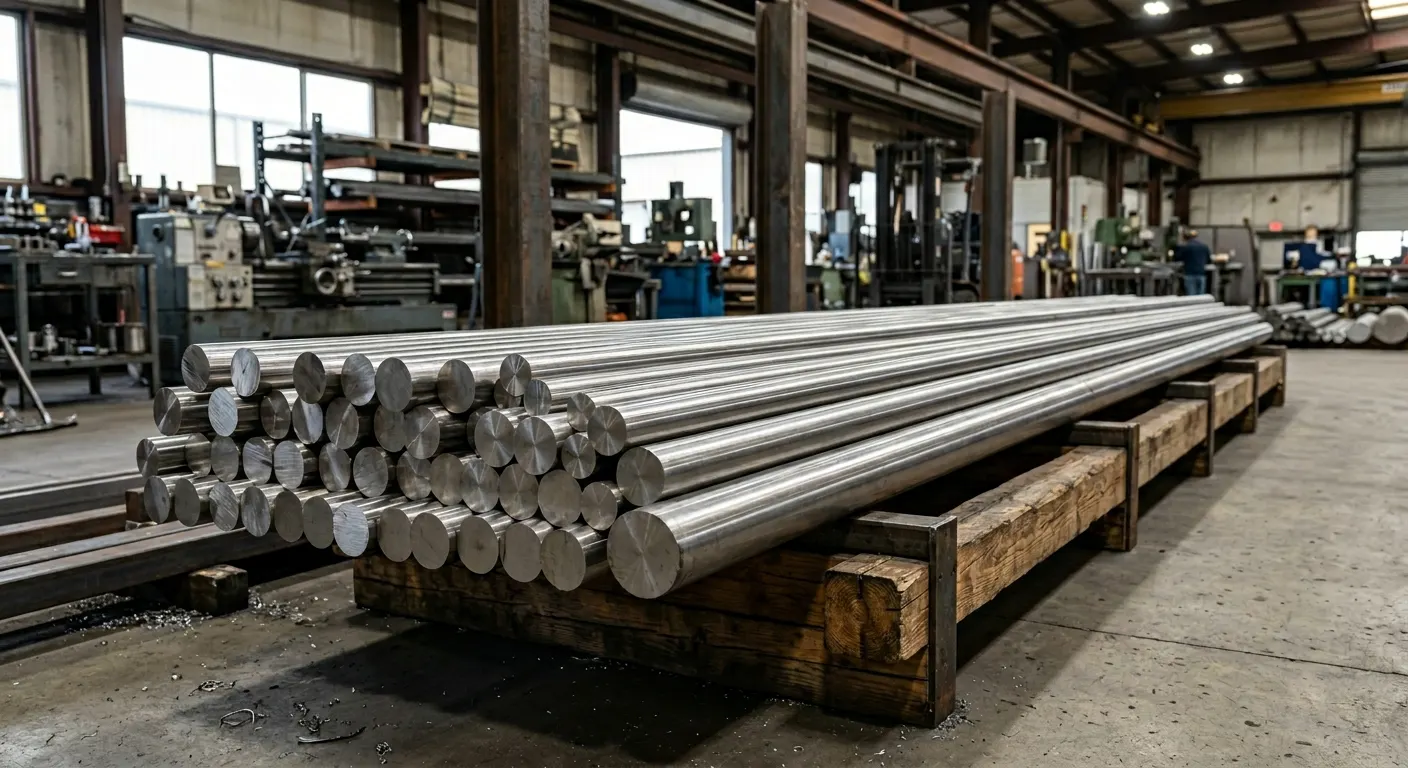
ASTM A276 AISI 303 Stainless Steel Round Bars
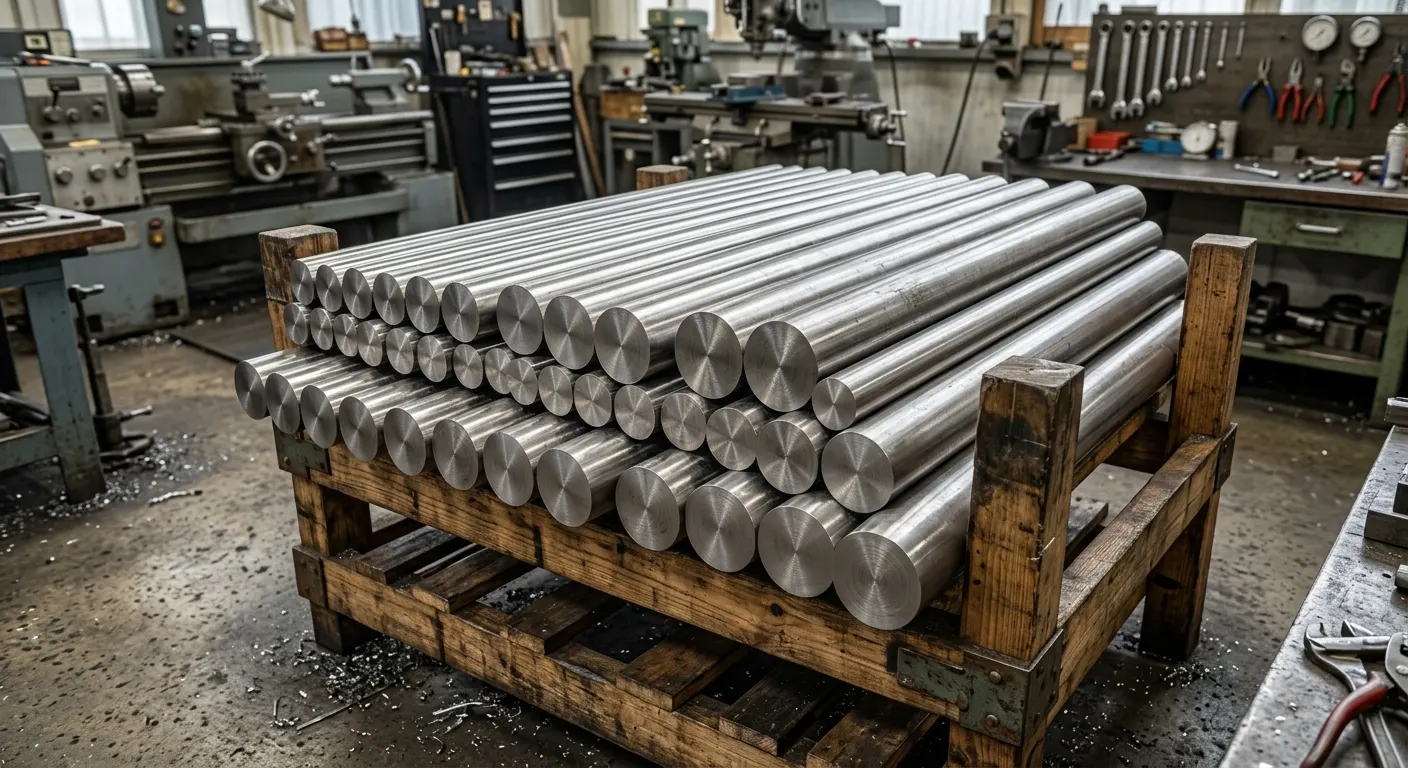
ASTM A276 AISI 303 SS Round Bars
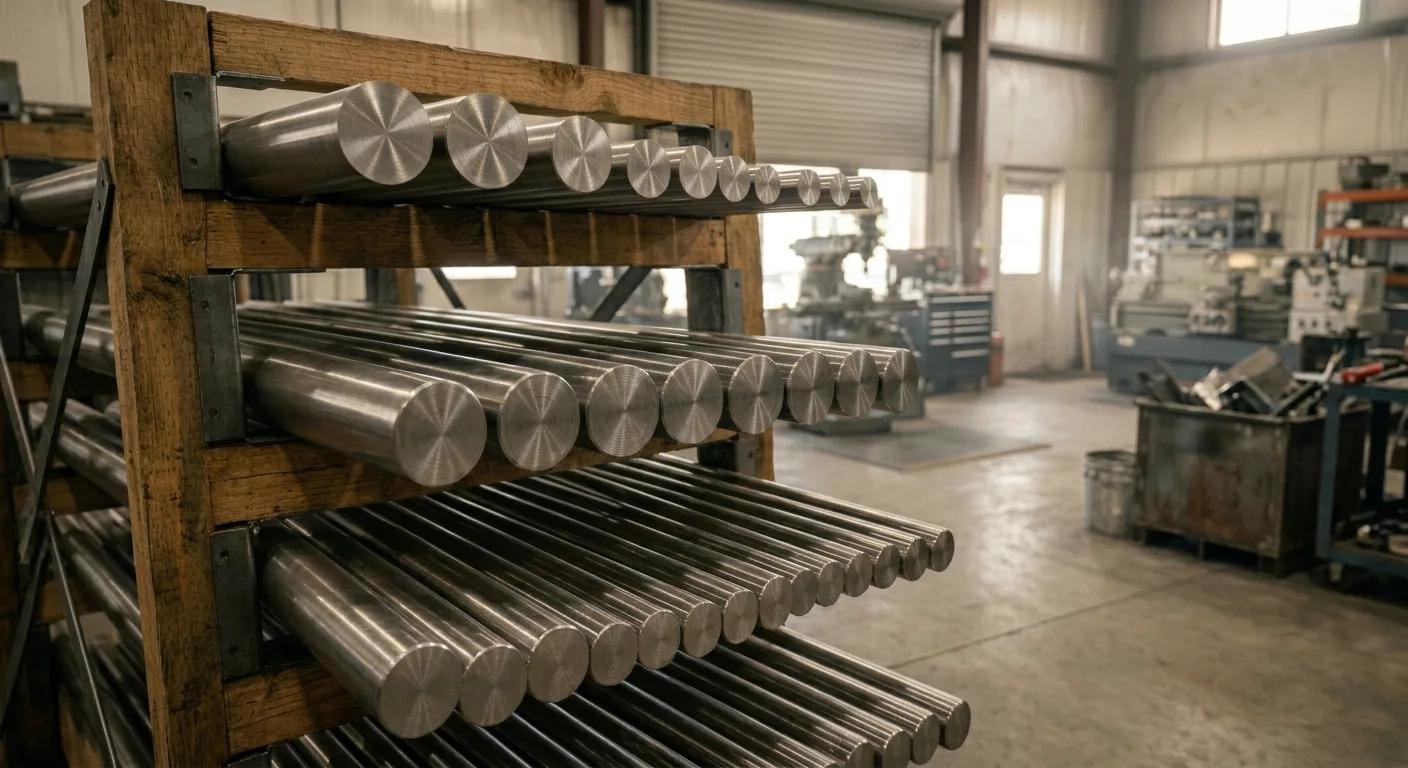
AISI 303 Stainless Steel Round Bars
Stainless Steel 303 Round Bars for Precision CNC and Automatic Machining Applications
SS303 round bars are extensively used for machining applications because the sulfur-enhanced chemistry improves free-machining characteristics during production operations. The sulfur content in ASTM A276 Type 303 stainless steel bars improves chip fragmentation during machining and reduces cutting resistance during high-speed turning and threading operations.
UNS S30300 stainless steel round bars are suitable for CNC machining centers, automatic screw machining, precision turned parts, threaded assemblies, couplings, industrial fasteners, and machined engineering components requiring stable dimensional tolerances and smoother machining behavior. Cold drawn stainless steel 303 round bars and bright drawn bars are widely preferred where machining precision and surface consistency are critical during automated manufacturing operations.
Benefits of AISI 303 Stainless Steel Round Bars in Precision Engineering
ASTM A276 stainless steel 303 round bars provide improved machining efficiency across precision engineering and automated machining applications. The controlled sulfur content improves chip breaking during cutting operations and helps maintain smoother machining cycles during turning, tapping, drilling, and threading processes. This allows reduced tooling wear and improved machining productivity during continuous production environments.
Stainless steel 303 bright bars are also preferred for applications requiring improved dimensional consistency and precision tolerance control. Industries manufacturing shafts, valve stems, couplings, machined fittings, and threaded components frequently use SS303 round bars for repeatable machining performance and stable production efficiency across CNC machining systems.
Chemical Composition and Mechanical Properties of SS303 Round Bars
ASTM A276 UNS S30300 stainless steel round bars are manufactured with controlled chemical composition to balance corrosion resistance, machining performance, dimensional stability, and mechanical strength. The sulfur content in AISI 303 stainless steel is specifically maintained to improve machining characteristics during automated and high-speed machining operations.
Chemical Composition of UNS S30300 Stainless Steel Bars
| Grade | Carbon C % | Manganese Mn % | Silicon Si % | Sulfur S % | Phosphorus P % | Chromium Cr % | Nickel Ni % | Iron Fe |
|---|---|---|---|---|---|---|---|---|
| SS303 Min | — | — | — | 0.15 | — | 17.00 | 8.00 | Balance |
| SS303 Max | 0.15 | 2.00 | 1.00 | 0.35 | 0.20 | 19.00 | 10.00 | Balance |
| ASTM A276 Limit | 0.15 | 2.00 | 1.00 | 0.15–0.35 | 0.20 | 17–19 | 8–10 | Balance |
| UNS S30300 | 0.12 | 1.80 | 0.75 | 0.28 | 0.15 | 18.20 | 8.50 | Balance |
| Bright Bar Grade | 0.10 | 1.60 | 0.65 | 0.30 | 0.12 | 18.00 | 8.30 | Balance |
| Cold Drawn Grade | 0.11 | 1.75 | 0.70 | 0.25 | 0.10 | 18.40 | 8.70 | Balance |
Mechanical Properties of AISI 303 Stainless Steel Round Bars
| Condition | Tensile Strength MPa | Yield Strength MPa | Elongation % | Hardness HB | Hardness HRB | Density g/cm³ | Elastic Modulus GPa | Shear Modulus GPa |
|---|---|---|---|---|---|---|---|---|
| Annealed | 620 | 240 | 50 | 190 | 90 | 8.00 | 193 | 77 |
| Cold Drawn | 720 | 420 | 35 | 220 | 96 | 8.00 | 193 | 77 |
| Bright Drawn | 740 | 450 | 32 | 225 | 97 | 8.00 | 193 | 77 |
| Peeled Finish | 680 | 310 | 42 | 205 | 92 | 8.00 | 193 | 77 |
| Precision Ground | 760 | 470 | 30 | 228 | 98 | 8.00 | 193 | 77 |
| Forged Condition | 650 | 280 | 45 | 195 | 91 | 8.00 | 193 | 77 |
Physical Properties of Stainless Steel 303 Bright Bars
| Property Type | Density kg/m³ | Melting Range °C | Thermal Conductivity W/mK | Electrical Resistivity µΩ.m | Thermal Expansion µm/m°C | Specific Heat J/kgK | Magnetic Permeability | Elastic Modulus GPa |
|---|---|---|---|---|---|---|---|---|
| Standard Value | 8000 | 1400–1450 | 16.3 | 0.72 | 17.3 | 500 | 1.02 | 193 |
| Bright Drawn | 8000 | 1400–1450 | 16.1 | 0.71 | 17.2 | 500 | 1.01 | 193 |
| Cold Drawn | 8000 | 1398–1450 | 16.0 | 0.70 | 17.1 | 500 | 1.01 | 193 |
| Peeled Finish | 8000 | 1400–1448 | 16.2 | 0.72 | 17.3 | 500 | 1.02 | 193 |
| Ground Finish | 8000 | 1400–1450 | 16.3 | 0.71 | 17.2 | 500 | 1.01 | 193 |
Stainless Steel 303 Round Bar Specifications and Size Range
Steel House India supplies stainless steel 303 round bars in hot rolled, bright drawn, cold drawn, peeled, polished, and centerless ground conditions for machining and engineering applications requiring precision dimensional tolerances and machining-grade consistency. UNS S30300 round bars are processed for precision machining systems, threaded engineering components, automatic lathe operations, and industrial machining environments.
SS303 Round Bar Dimensions and Size Availability
| Product Form | Diameter Range | Metric Sizes | Inch Sizes | Standard Length | Finish Type | Manufacturing Process | Custom Cut Length |
|---|---|---|---|---|---|---|---|
| Bright Bars | 3 mm – 100 mm | M3 – M100 | 1/8" – 4" | 3–6 Meter | Bright | Cold Drawn | Yes |
| Cold Drawn Bars | 5 mm – 120 mm | M5 – M120 | 3/16" – 5" | 3–6 Meter | Smooth | Cold Finished | Yes |
| Hot Rolled Bars | 16 mm – 350 mm | M16 – M350 | 5/8" – 14" | 3–6 Meter | Black | Hot Rolled | Yes |
| Peeled Bars | 20 mm – 150 mm | M20 – M150 | 3/4" – 6" | 3–6 Meter | Peeled | Peeled & Straightened | Yes |
| Polished Bars | 10 mm – 80 mm | M10 – M80 | 3/8" – 3" | 3–6 Meter | Polished | Bright Finished | Yes |
| Forged Bars | 130 mm – 500 mm | M130 – M500 | 5" – 20" | Custom | Rough Forged | Forged | Yes |
| Centerless Ground Bars | 5 mm – 90 mm | M5 – M90 | 3/16" – 3.5" | 3–6 Meter | Ground | Precision Ground | Yes |
Stainless Steel 303 Bar Tolerance and Straightness Specifications
| Diameter Range | h8 Tolerance mm | h9 Tolerance mm | h11 Tolerance mm | Straightness Deviation | Ovality mm | Surface Roughness Ra µm | Length Tolerance mm |
|---|---|---|---|---|---|---|---|
| 3–6 mm | ±0.022 | ±0.036 | ±0.090 | 0.5 mm/m | 0.01 | 0.8 | ±2 |
| 6–12 mm | ±0.027 | ±0.043 | ±0.110 | 0.5 mm/m | 0.01 | 0.8 | ±2 |
| 12–30 mm | ±0.033 | ±0.052 | ±0.130 | 0.5 mm/m | 0.02 | 0.8 | ±2 |
| 30–50 mm | ±0.039 | ±0.062 | ±0.160 | 0.8 mm/m | 0.03 | 1.0 | ±3 |
| 50–80 mm | ±0.046 | ±0.074 | ±0.190 | 0.8 mm/m | 0.03 | 1.2 | ±3 |
| 80–120 mm | ±0.054 | ±0.087 | ±0.220 | 1.0 mm/m | 0.05 | 1.6 | ±5 |
| 120–180 mm | ±0.063 | ±0.100 | ±0.250 | 1.2 mm/m | 0.06 | 1.6 | ±5 |
Surface Finish Specifications for SS303 Bright Bars
| Finish Type | Roughness Ra µm | Dimensional Accuracy | Straightness | Machining Quality | Surface Appearance | Typical Applications | Manufacturing Method |
|---|---|---|---|---|---|---|---|
| Bright Finish | 0.8 | High | Excellent | Excellent | Smooth Metallic | CNC Components | Cold Drawn |
| Peeled Finish | 1.2 | High | Very Good | Excellent | Clean Surface | Shafts & Rods | Peeled |
| Polished Finish | 0.4 | Precision | Excellent | Precision Grade | Reflective | Precision Engineering | Polished |
| Black Finish | 3.2 | Standard | Standard | Moderate | Oxide Scale | Structural Machining | Hot Rolled |
| Ground Finish | 0.2 | Precision | Excellent | High Precision | Fine Smooth | Precision Shafts | Ground |
| Matt Finish | 1.8 | Medium | Good | Good | Satin Finish | General Engineering | Finished |
| Turned Finish | 1.0 | High | Very Good | Excellent | Machined Surface | Turned Components | Turned |
Hot Rolled, Cold Drawn and Bright Drawn Stainless Steel 303 Round Bars
Hot rolled stainless steel 303 round bars are generally used for larger diameter engineering applications requiring machining allowances and standard structural machining operations. These bars are suitable for forged components, heavy engineering systems, and industrial fabrication applications requiring machining after processing.
Cold drawn and bright drawn stainless steel 303 round bars provide improved dimensional precision, tighter tolerance control, smoother surface finish, and better straightness consistency for precision machining applications. Bright drawn SS303 bars are widely used for shafts, couplings, threaded rods, valve stems, and automatic machining applications where machining repeatability and surface consistency are important.
Why SS303 Stainless Steel Round Bars are Preferred for High-Speed Machining
ASTM A276 UNS S30300 round bars are preferred for high-speed machining because the sulfur-enhanced chemistry improves chip fragmentation and reduces cutting resistance during machining operations. This allows improved machining consistency during threading, turning, tapping, drilling, and automatic screw machining applications.
Industries manufacturing precision machined components frequently use stainless steel 303 bright bars to reduce tooling wear, improve cutting stability, and maintain dimensional consistency across continuous production machining systems. SS303 round bars are commonly selected for precision turned components and threaded engineering applications where machining efficiency directly affects production output.
Difference Between Stainless Steel 303 and SS304 Round Bars
Stainless steel 303 round bars are specifically optimized for machining applications, while SS304 round bars are primarily selected for corrosion resistance and fabrication performance. The sulfur addition in SS303 improves machinability and chip control during CNC machining operations, whereas SS304 provides improved weldability and corrosion resistance for fabrication-intensive environments.
Applications involving precision machining, automatic screw machining, and threading operations generally prefer SS303 round bars for machining efficiency and tooling performance. Fabrication and welding applications commonly evaluate Stainless Steel 304 Round Bars Manufacturers in India based on corrosion resistance and welding compatibility requirements.
Chemical Composition Comparison of SS303 vs SS304 Round Bars
| Grade | Carbon % | Sulfur % | Chromium % | Nickel % | Manganese % | Silicon % | Phosphorus % | Iron |
|---|---|---|---|---|---|---|---|---|
| SS303 | 0.15 Max | 0.15–0.35 | 17–19 | 8–10 | 2.00 Max | 1.00 Max | 0.20 Max | Balance |
| SS304 | 0.08 Max | 0.03 Max | 18–20 | 8–10.5 | 2.00 Max | 1.00 Max | 0.045 Max | Balance |
| Difference | Higher Carbon | Higher Sulfur | Slightly Lower Cr | Similar Ni | Similar Mn | Similar Si | Higher P | Balance |
Machining and Mechanical Comparison Between SS303 and SS304
| Property | SS303 | SS304 |
|---|---|---|
| Machinability | Excellent | Moderate |
| Weldability | Moderate | Excellent |
| Corrosion Resistance | Good | Excellent |
| Tool Wear | Low | Higher |
| Chip Control | Excellent | Moderate |
| Cutting Speed | High | Moderate |
| Threading Performance | Excellent | Good |
| Surface Finish After Machining | Smooth | Moderate |
| Automatic Machining Suitability | Excellent | Moderate |
ASTM A276 Compliance Standards for Stainless Steel 303 Round Bars
ASTM A276 establishes standard specifications for stainless steel bars used in machining, engineering, and industrial fabrication applications. The standard defines dimensional tolerances, straightness limits, mechanical property requirements, finish conditions, and inspection parameters for stainless steel round bars.
ASTM A276-compliant stainless steel 303 round bars are manufactured to maintain machining consistency, dimensional stability, and material reliability across precision engineering and automated machining applications. Procurement teams sourcing machining-grade stainless steel bars often verify ASTM compliance for tolerance control, inspection standards, and material consistency.
Equivalent Standards for UNS S30300 Stainless Steel Round Bars
| ASTM Standard | AISI Grade | UNS Number | EN Equivalent | DIN Equivalent | JIS Standard | Werkstoff No. | ISO Grade |
|---|---|---|---|---|---|---|---|
| ASTM A276 | 303 | S30300 | X10CrNiS18-9 | 1.4305 | SUS303 | 1.4305 | 303 |
| ASTM A582 | 303 | S30300 | X8CrNiS18-9 | 1.4305 | SUS303Se | 1.4305 | 303Se |
Material Testing and Inspection Standards for SS303 Bars
| Testing Method | Inspection Type | Acceptance Standard | Frequency | Certification | Applicable Standard | Verification Purpose | Inspection Category |
|---|---|---|---|---|---|---|---|
| PMI Testing | Spectrometer | Grade Compliance | Batch Wise | Available | ASTM | Material Verification | Chemical |
| Tensile Testing | UTM | Strength Compliance | Batch Wise | Available | ASTM E8 | Mechanical Validation | Mechanical |
| Hardness Testing | Brinell/Rockwell | Hardness Range | Batch Wise | Available | ASTM E18 | Hardness Validation | Mechanical |
| Ultrasonic Testing | UT Inspection | Internal Soundness | As Required | Available | ASTM A388 | Defect Detection | NDT |
| Dimensional Inspection | Micrometer | Tolerance Compliance | 100% | Available | ASTM A276 | Dimensional Verification | Dimensional |
| Surface Inspection | Visual & Ra Test | Finish Quality | 100% | Available | ASTM A480 | Surface Validation | Visual |
| Straightness Inspection | Dial Gauge | Straightness Limit | Batch Wise | Available | ASTM A276 | Straightness Control | Dimensional |
Stainless Steel 303 Round Bars for Precision Engineering and Machined Components
UNS S30300 stainless steel round bars are widely used for CNC machined shafts, couplings, threaded rods, valve stems, industrial fasteners, machined fittings, precision engineering components, and automatic screw machining applications requiring stable machining performance and dimensional consistency.
Cold drawn stainless steel 303 round bars and bright bars are extensively used across machining environments requiring tighter tolerances, smoother finish quality, and repeatable machining behavior during continuous production operations. Industries manufacturing high-volume precision components frequently use SS303 round bars to improve machining productivity and tooling efficiency.
Stainless Steel 303 Bright Bars for Precision Machined Parts
Stainless steel 303 bright bars are preferred for machining applications requiring precision dimensional tolerances, improved straightness, and smoother surface finish during CNC operations. Bright drawn bars are widely used for threaded components, shafts, couplings, precision fittings, and machined engineering assemblies requiring stable machining behavior.
Centerless ground and peeled stainless steel 303 round bars provide improved finish quality and dimensional consistency for precision engineering systems and high-speed machining applications. These bars are commonly selected for precision turned components and industrial machining systems requiring repeatable machining accuracy.
Why Choose Steel House India for Stainless Steel 303 Round Bars
Steel House India supplies ASTM A276 UNS S30300 stainless steel round bars for machining-intensive industrial applications requiring dimensional consistency, machining-grade material quality, precision tolerances, and controlled surface finish standards. The supplied SS303 round bars are processed for CNC machining compatibility and automated production machining systems.
As a trusted Stainless Steel Round bar manufacturer in India , Steel House India supplies stainless steel 303 bright bars, cold drawn bars, peeled bars, and precision machining bars for industrial engineering applications requiring machining stability, ASTM-compliant specifications, and inspection-controlled material quality.
Stainless Steel Round Bar Supplier for Precision Machining and Industrial Engineering Requirements
Applications involving CNC machining, threaded engineering components, precision shafts, automatic screw machining, valve systems, and industrial fabrication assemblies require stainless steel round bars with stable machining behavior and controlled dimensional tolerances. ASTM A276 Type 303 stainless steel round bars are widely selected across machining-intensive industries due to improved machinability, smoother chip control, and machining efficiency during high-speed production operations.
Steel House India supplies stainless steel 303 round bars, bright drawn bars, cold drawn bars, and machining-grade stainless steel products for industrial engineering applications requiring dimensional stability, precision machining compatibility, and reliable material consistency across automated machining environments.